

There are three kinds of lies: lies, damned lies, and statistics. — Mark Twain
Russian statistical demographer, Prof. Boris Borisov, used Frank Dikotter’s techniques on the US population before and after the Great Depression and found that seven million Americans starved to death. Is America covering up this tragedy, or is there another explanation?
Based on previous demographic trends, the US expected a population of 142-million in 1940, but it reached only 132-million, of which only 3-million can be explained by migration dynamics. What happened to the 7.4-million missing people?
American Famine
According to the US statistics, the US lost 8, 553,000 people from 1931 to 1940. Afterwards, population growth indices change twice instantly exactly between 1930-1931: the indices drop and stay on the same level for ten years. There can no explanation to this phenomenon found in the extensive text of the report by the US Department of Commerce “Statistical Abstract of the United States,” the author wrote.
A lot more people left the country than arrived during the 1930s – the difference is estimated at 93,309 people, whereas 2.960,782 people arrived in the country a decade earlier. Well, let’s correct the number of total demographic losses in the USA during the 1930s by 3,054 people.
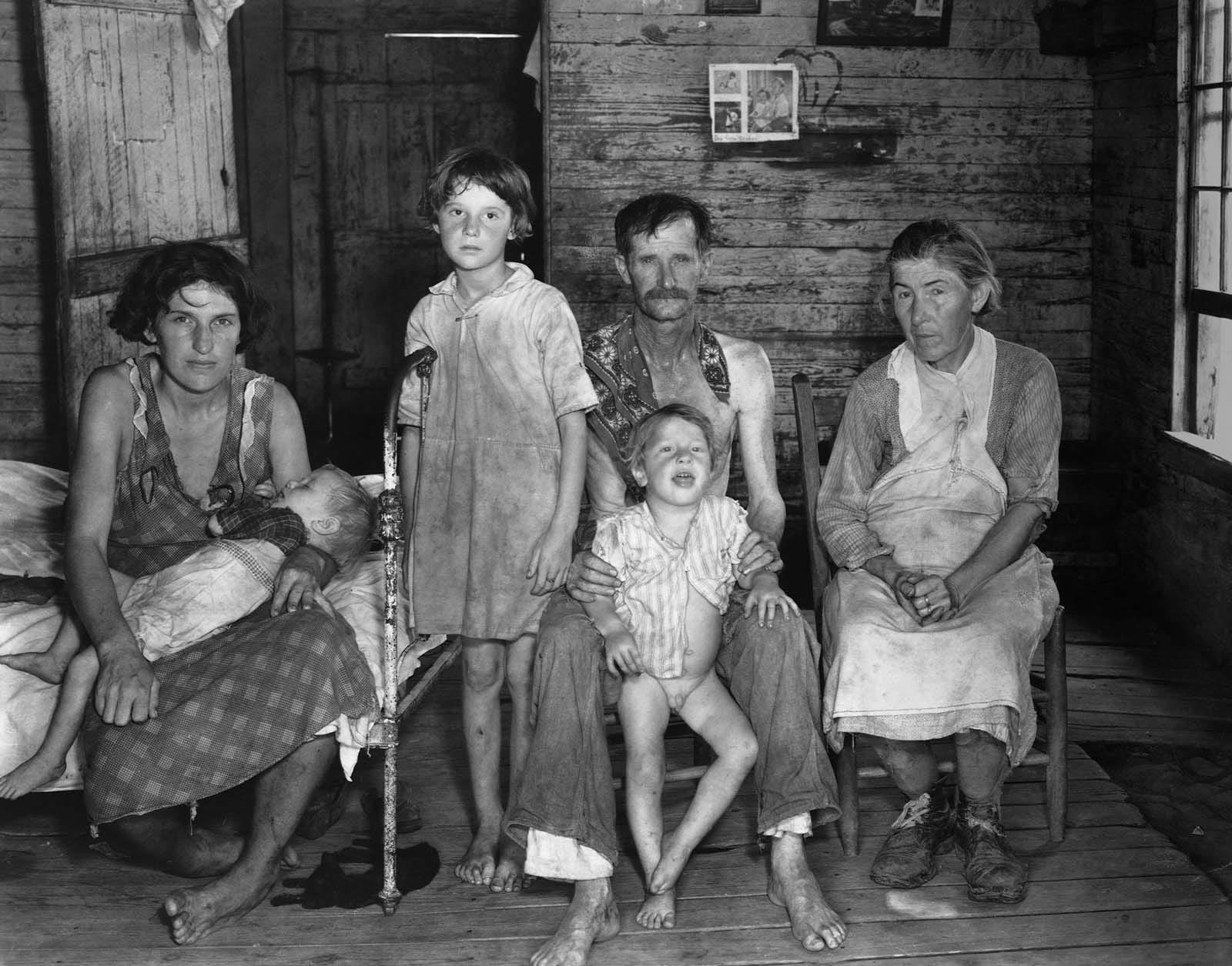
There is a remarkable similarity with events taking place in the USSR during the 1930s. Few people know about five million American farmers (a million families) whom banks ousted from them lands because of debts. The US government did not provide them with land, work, social aid, pension – nothing. Every sixth American farmer was affected by famine. People were forced to leave their homes and go to nowhere without any money and any property. They found themselves in the middle of nowhere enveloped in massive unemployment, famine and gangsterism.
Simultaneously, the US government destroyed foodstuffs that vendors could not sell. Market rules were observed strictly: unsold goods should always be categorized as redundant and they could not be given away to the poor because it could cause damage to businesses. A variety of methods was used to destroy redundant food. They burnt crops, drowned them in the ocean or plowed 10 million hectares of harvesting fields. About 6.5 million pigs were killed at that time.
A child recollected about those years: “We changed our usual food for something for available. We used to eat bush leaves instead of cabbage. We ate frogs too. My mother and my older sister died during a year. (Jack Griffin).
Public works introduced by President Roosevelt became a salvation for a huge number of jobless and landless Americans. However, the salvation was only a phantom. The works conducted under the aegis of the Public Works Administration and the Civil Works Administration were about building channels, roads or bridges in remote, wild and dangerous territories. Up to 3.3 million people were involved in those works at a time, whereas the total number of people amounted to 8.5 million, not counting prisoners. Conditions and death rates at those works are to be studied separately.
A member of public workers would make $30 and pay $25 of taxes from this. So a person could make only $5 for a month of hard work in malarial swamps, conditions comparable to Stalin’s GULAG. The Public Works Administration (PWA) bore a striking resemblance to GULAG. The PWA was chaired by “American Beria,” Secretary of Interior Affairs, Harold Ickes, who threw about two million people into camps for the unemployed youth. “Ickes (1874–1952) later interned USA’s ethnic Japanese in concentration camps in only 72 hours (1941-1942).
Famine Fact Check
The US lost 7 million people due to
famine during the Great Depression? US Census data shows the population grew from 122.8 million (1930) to 132.2 million (1940), an increase of 9.4 million. There was no multi-million excess death event. US Census Bureau – 1930 & 1940.
There was a sudden unexplained drop in population growth indices between 1930–1931 that lasted a decade? The decline in growth rate was due to sharply reduced immigration (due to 1920s laws) and falling birth rates during the Depression — both well-documented and explained in official reports. US Census Historical Population Data
Net emigration of 93,309 people in the 1930s (vs. millions arriving previously). There was net emigration in some years of the 1930s, but the total demographic effect was minor compared to natural population growth.
Five million American farmers (one million families) were ousted from their lands (“defarming”)? Approximately 2.5 million people migrated out of the Dust Bowl states. 1 million farms were lost or foreclosed during the decade, but the “5 million farmers” figure is not supported by census or USDA data. Library of Congress – Dust Bowl Migration
US government destroyed 6.5 million pigs and plowed under 10 million acres of crops? True. Under the Agricultural Adjustment Act (1933), the government did slaughter 6 million pigs and plowed under millions of acres of crops to reduce surpluses and raise prices. USDA Historical Records
Public Works programs (PWA/CWA) were comparable to Stalin’s GULAG; Harold Ickes was “American Beria.” The PWA built infrastructure (dams, bridges, schools) and employed millions. Conditions were harsh, but workers were paid wages and projects were voluntary civilian programs. Ickes was known as “Honest Harold” for anti-corruption efforts. He did oversee Japanese-American internment later, but the GULAG comparison is rhetorical. Harold Ickes Biography
The US was short 7.4 million people by 1940 compared to expected demographic trends? Official census shows steady (though slowed) growth. Borisov’s projection assumes that high pre-Depression growth rates should continue unchanged. Demographers attribute the slowdown to lower birth rates and reduced immigration.
A perfectly natural explanation
Borisov’s article significantly exaggerates and misinterprets official US Census data to claim a “famine” on the scale of the Holodomor. While the Great Depression caused immense hardship, widespread starvation and excess mortality, there is no credible demographic evidence for millions of famine deaths comparable to Soviet famines. The piece is widely regarded by historians as propaganda rather than rigorous scholarship.
The British and American Governments paid Frank Dikötter $2 million dollars to apply that formula. Prof. Borisov’s paper was stricken from the Western records.
Since you — correctly — conclude that “the piece is widely regarded by historians as propaganda rather than rigorous scholarship,” using a headline like you did is inappropriate. At best it comes across as cheap click‑bait; at worst it risks amplifying the very propaganda you’re criticizing.