

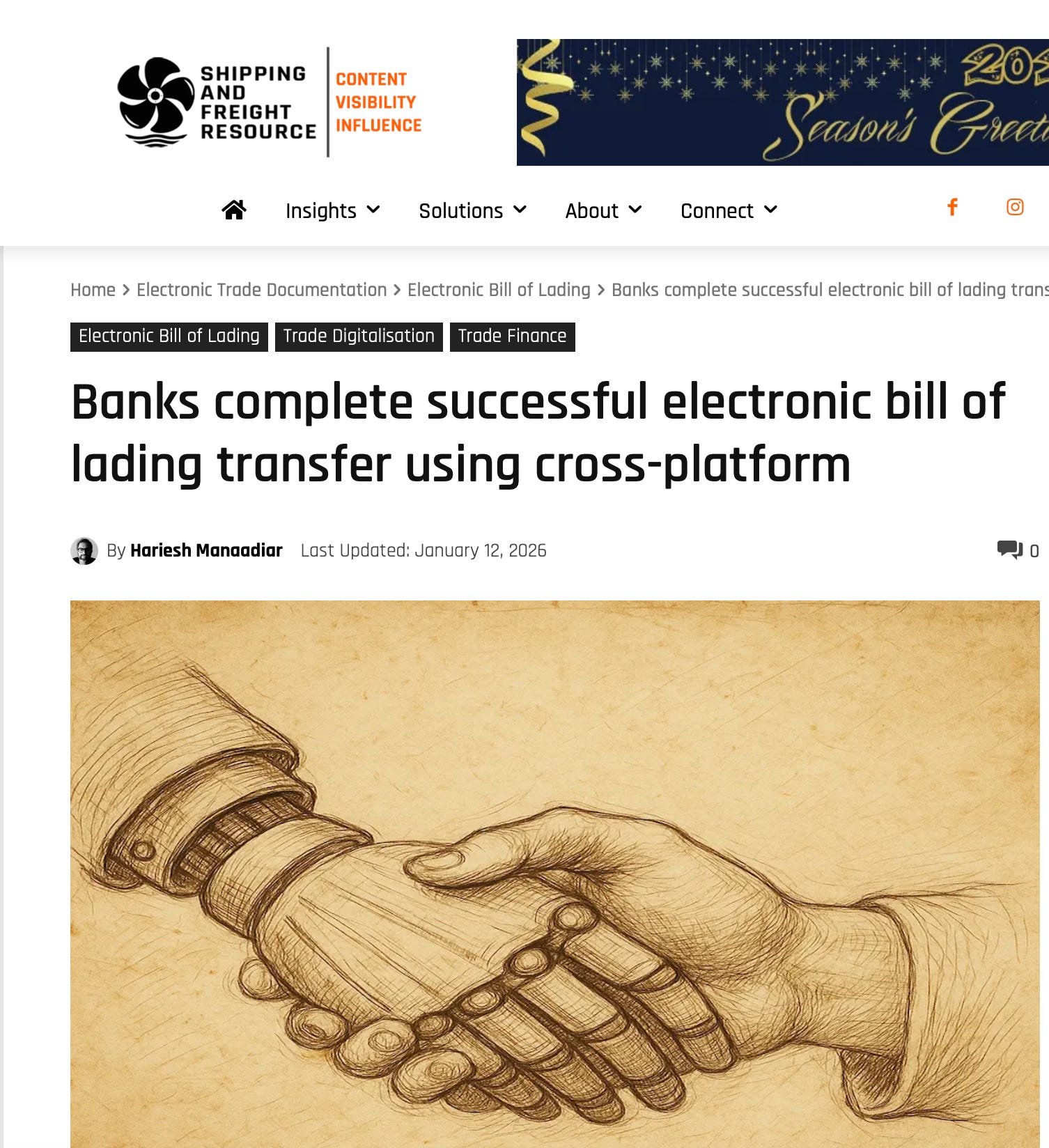
1-13-2026. Global trade took another meaningful step toward digitalisation with a recent successful demonstration of cross-platform electronic bills of lading (eBLs) involving banking institutions: a live, digital transaction was completed involving parties across shipping, manufacturing, and finance, uniting a traditionally fragmented digital landscape.
COSCO issued an eBL to Lenzing Co. through the IQAX eBL platform, which transferred it to HSBC using ICE CargoDocs, presented to China Zheshang Bank on the same platform, and ultimately surrendered by Jiangsu Dasheng back through IQAX eBL. This end-to-end process, spanning issuance, multiple transfers, presentation to a bank, and surrender, illustrates how eBLs can move securely across different digital systems and jurisdictions without losing their legal validity or uniqueness. Hariesh Manaadiar,
Ten years of designing, coding, simulating, security testing, bank acceptance and political persistence are paying off, saving shippers billions while taking their transactions off the US Treasury’s radar. Here’s how I described that process in Lord of Platforms, Convenor of Covenants:
The Road Less Taken
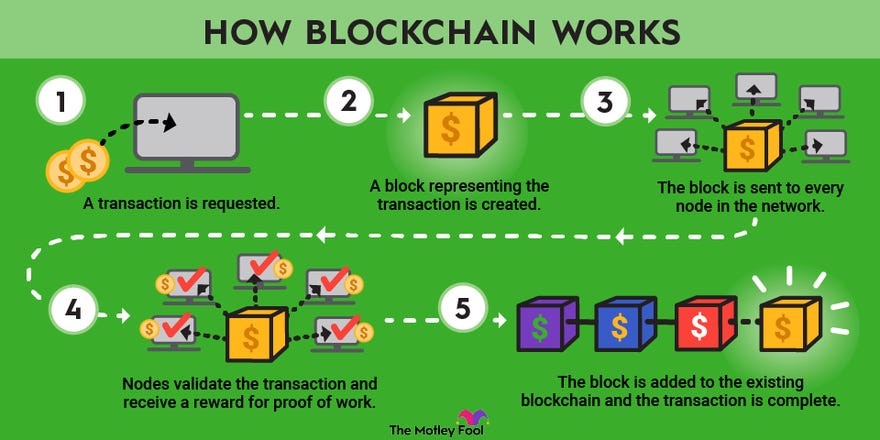
Starting in 2015, the People’s Bank of China used blockchain technology to create a trade and payment platform so secure that central banks would trust it and so convenient that grocers would use it. The platform, patented by the PBOC and blessed by BIS, the famous Gnomes of Basel, lets countries trade, insure, track and pay for exports and imports securely, cheaply, in real time and in their own currencies.
BSN
The Bank’s first product, the Blockchain-based Service Network, BSN, provides a level digital playing field for businesses big and small wanting blockchain functionality. It’s cheap, accessible, ubiquitous, secure, anonymous and fast. Technically, it’s a ‘cross-cloud, cross-portal, cross-framework, global, public infrastructure network anyone can use to deploy and/or operate any type of Blockchain Distributed Application (DApp) anywhere in the world’. Less technically, BSN is a secure platform with built-in blockchain functionality and an easily configured interface.
CBDCs
The first blockchain app the Bank built on the BSN platform was the e-CNY, its Central Bank Digital Currency, or CBDC. “Its programmability makes it a model for ensuring cross-chain communication between the payment blockchain and the business blockchain, so that one party can perform the contract and the other party can automatically deliver it. This brings huge synergy to the industry”. The Bank distributed its e-currency template so that other central banks can customize their versions.
mBridge
The payment system underpinning cross-border financial flows has not kept pace with rapid growth in global economic integration. The global network of correspondent banks that facilitates international payments is hindered by high costs, low speed and transparency, and operational complexities. Banks are also paring back their correspondent networks and services, leaving many participants (notably emerging market and developing economies) without sufficient or affordable access to the global financial system. – BIS.
Earlier in these pages we covered the first blockchain-Distributed App, or DApp, which the Bank calls mBridge. It makes real-time, peer-to-peer, cross-border payments and foreign exchange transactions in local CBDC currencies a one-click affair. Thai refiners buy UAE crude with e-baht, and the UAE sellers simultaneously receive e-dirhams for their oil. For the first time, countries are trading quickly, securely and inexpensively, on their own terms, and in their own currencies. mBridge turbocharges ‘free trade’.
LOGINK
LOGINK, another DApp on the BSN platform, aggregates data from domestic and foreign ports, foreign logistics networks, millions of PRC users and other public databases to provide the most comprehensive picture available of the world’s logistics activities in real time. “LOGINK lets Beijing monitor and shape the international logistics market,” says a US think tank.
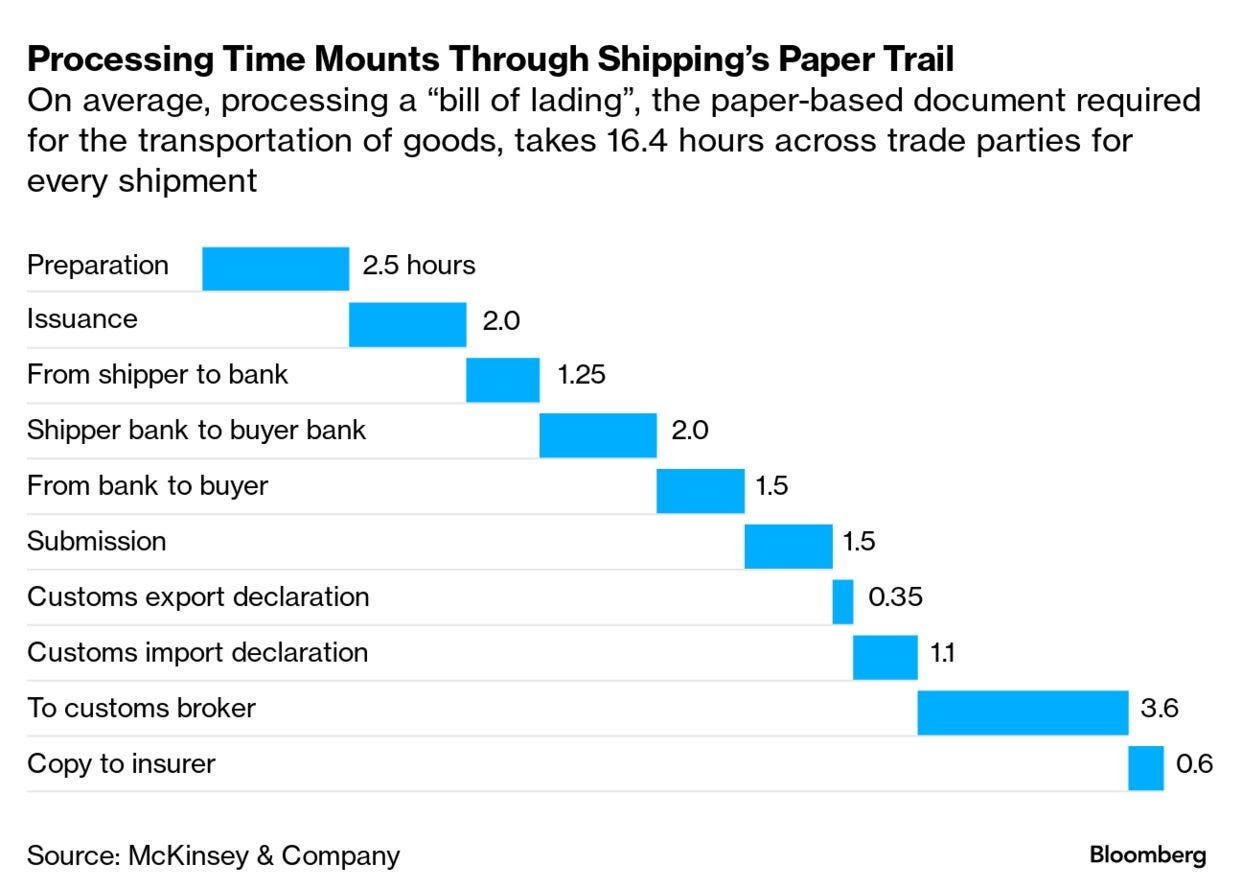
McKinsey says shifting to electronic bills of lading would unlock $40 billion in additional global trade volume, particularly in emerging markets. The theory is that banks could be more amenable to finance trade for smaller, potentially riskier, counterparts if they did things digitally.
PHARMALINK
While the payments blockchain tracks finances, the business blockchain tracks things: China, the world’s largest manufacturer, needs to track the sources, carbon footprint, purity and potency of its purchases and products. This gives rise to hundreds of specialized DApps like Pharmalink. It keeps a secure record of a drug’s entire journey, from to giving ingredient sources it to patients’ digestive system; it securely stores and shares clinical trial data; patients can choose who can access their data; it tracks drug safety data in real time.
Convenor of Covenants
Technologies like CBDCs, mBridge and LOGINK are tips of icebergs supported by a vast bulk that keeps them above water. mBridge is supported by complex covenants between central banks; the Shanghai Cooperative Organization is a security covenant between states’ security services; the BRI is a development covenant; GEIDCO is an energy covenant, and LOGILINK is a logistics covenant. They’re all Chinese and all make life easier, cheaper and safer for the world. They’re signs that Beijing follows Mencius’ advice on Statesmanship: “By using virtue and practicing benevolence the wise ruler will achieve humane authority, for the humane man has no enemies”.
Another 'great article Godfree. Kudos.
Brilliant, Godfree, thankyou.