

Science & Technology
“China has now independently mastered all the core and supporting technologies for large fast reactors after a decade of research, exploration and engineering practice, and has the world’s most complete fast reactor industry chain.”
After Beijing adopted open-source RISC as the national instruction set, Shanghai developed a RISC-V training program for 12 universities that are poised to graduate 900 RISC engineers annually.
China goes ‘back to the future’. Western companies viewed IP as a fortress: patent it, lock it in and guard it. But China’s IP system is taking a collective approach: open source, open data, shared patents, open APIs and innovation commons. It’s no longer who owns the invention but how that invention gets embedded into an ecosystem. In a country where collective systems have structured society for more than two
thousand years, this shift feels less radical than it sounds.
The world's largest green ammonia factory produces 180,000 tons of ammonia annually from 32,000 tons of green hydrogen. Project cost: $1 billion.
Guohua will build a 3,000,000-ton green ammonia/fuel project in Inner Mongolia using 10GW of clean energy.
Beijing on Friday launched the world’s first embodied artificial intelligence (AI) robot 4S store, along with the city's first robot-themed restaurant. The four-story 4S store, currently showcasing more than 100 robots from 40 companies, offers sales, maintenance, parts, and information services for robotics. The restaurant, featuring an innovative menu and over 20 types of robot workers, will collaborate with the neighboring 4S store to promote the commercialization of advanced robotics. The two stores opened amid the 2025 World Robot Conference, which also kicked off on Friday in Beijing's Yizhuang. The 5-day conference will welcome more than 200 robot enterprises from both at home and abroad to exhibit 1,500+ products, with the highlight of three competitions involving more than 6,000 teams from over 10 countries.
Economy & Trade
Construction of the Pinglu Canal (above), a 100-mile inland river I-class waterway, which will shorten the route between inland Guangxi and the sea by 350 miles when it opens next year.
China's service trade grew 8%, service exports 15% YoY. Knowledge-intensive services saw continued growth. eExports of travel services surged 69%.
China has banned exports to the US of gallium, germanium, antimony and high-tech materials with potential military applications as a general principle.
Hong Kong’s wealth under management grew 13% to $5 trillion in 2024. Digital assets and tokenized asset transactions have reached $3.3 billion YTD.
UNIDO: China’s share of advanced technologies will rise to 45% by 2030, while America’s falls to 11%.
Society & Environment
Children in their final pre-school year will receive free childcare and education at public kindergartens, with private kindergarten students receiving equivalent fee reductions based on local public kindergarten rates.
Thousands of paralyzed patients are signing up for brain computer interface trials, but only a handful meet medical criteria as doctors balance demand with science.
Diplomacy & Geopolitics
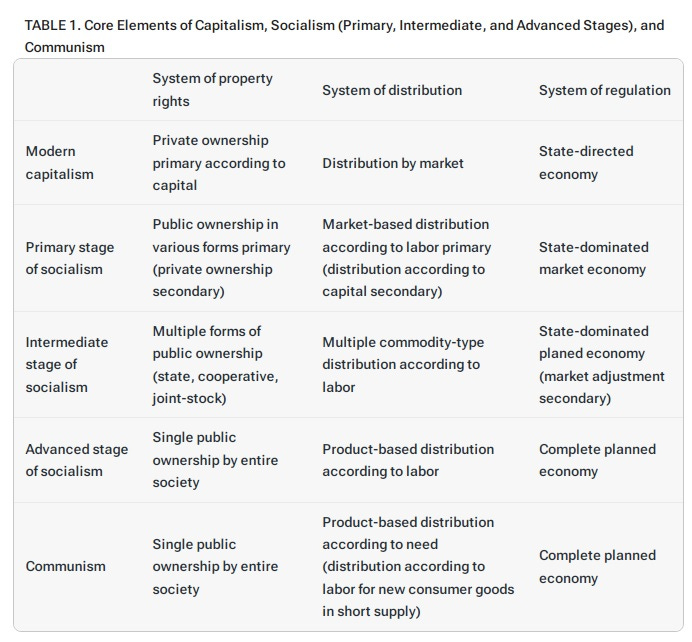
Above: Contents of Principles of Marxist Politics, Wang Huning Ed., is the foundation text
                                                           for Xi Jinping Thought.
China’s “Digital Vine” strategy of clinging to the established trunk of Western tech to sprout new, highly competitive branches extends beyond selling AI software in the cloud to a global audience. Chinese EV makers aren’t just selling cars; they are exporting a sophisticated ecosystem of batteries, charging networks, and in-car operating systems that will generate data and service revenue for years to come. In biotech, Chinese firms are building cloud platforms to offer affordable AI-powered drug discovery services to the world.
“If anyone’s tearing Taiwan apart, it’s not the CCP lurking in the shadows. It’s the DPP who have misgoverned for 9 years, relying on the ‘resist China and defend Taiwan’ card to farm votes. People are sick and tired of it”.
Powerchina will build a 130km transmission line to improve the connection to Egypt’s 1.8GW solar park in Aswan after pledging last month to build a $685 million solar power facility in Suez province–but 80% of the Suez plant’s production will be exported to Europe while only a fifth will be marketed locally.
We’re not just witnessing a shift in tech leadership, but a reshuffling of global roles, as if the U.S., Europe and China are switching places once again. China builds for tomorrow. The U.S. retreats into yesterday. Europe is adrift in the present. The question is no longer who sets the pace but who shapes the platform and the new paradigm.
Defense
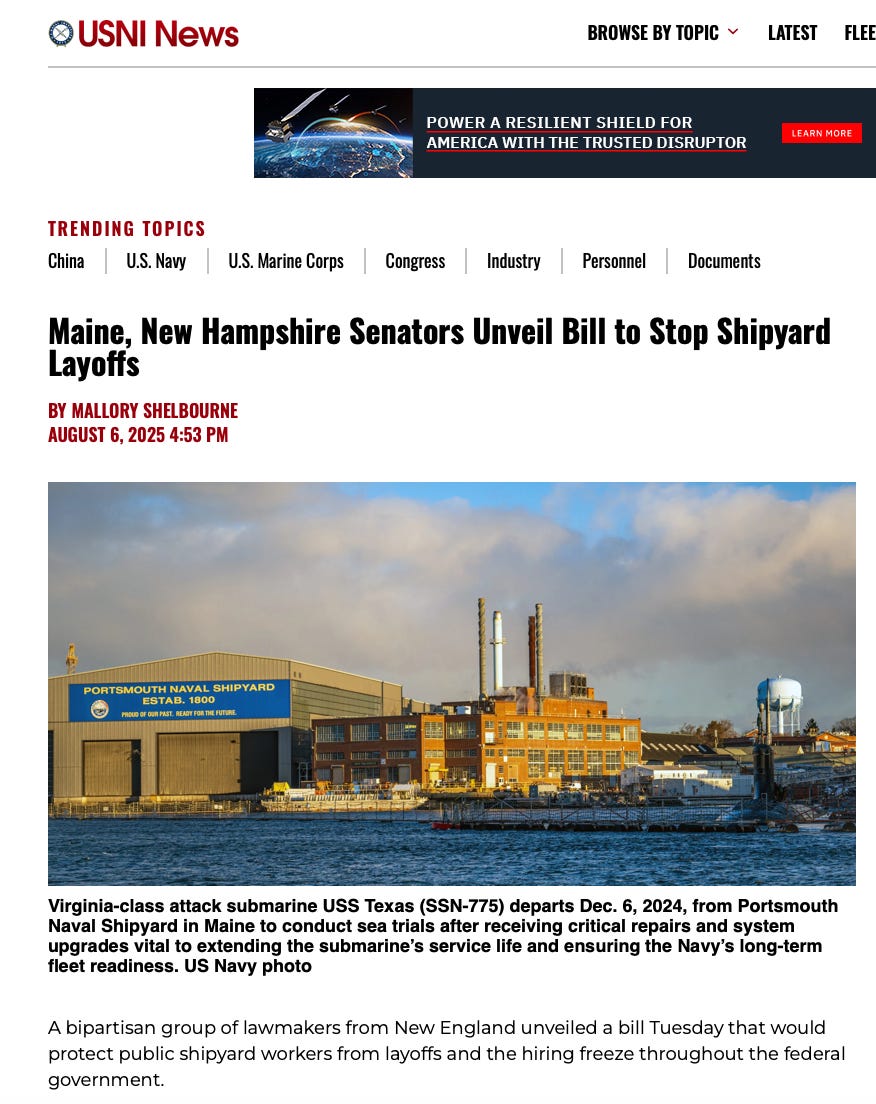
China’s two major shipbuilders are days from completing a merger that will form the largest publicly listed shipbuilding company in the world. They’ll merge their three main businesses–naval and commercial construction and marine engineering– and phase out low-efficiency docks, focus on high-end vessels, climb the value chain, grow GDP, need fewer workers as the manual labor force ages out.
COSCO Completes World’s First Green Ammonia Bunkering. Green ammonia combustion produces only nitrogen and water. The green ammonia was produced entirely with renewable electricity, creating a complete integration across the supply chain from production through transportation to final use in vessels.
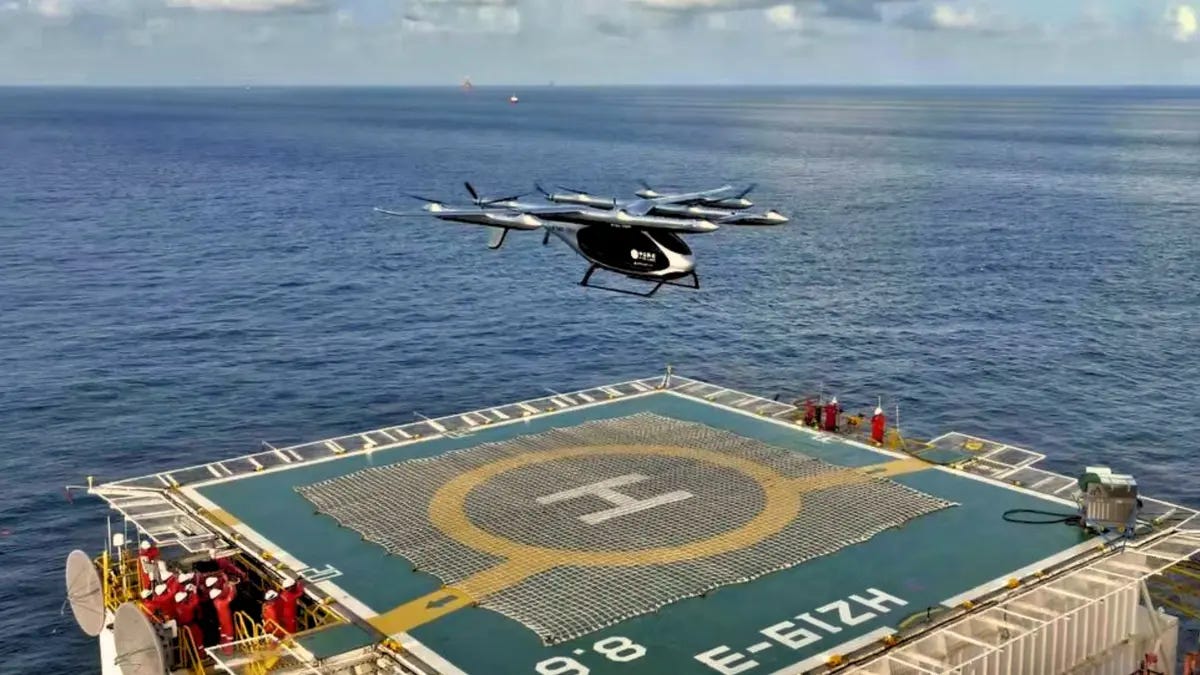
Autoflight's V2000CG CarryAll completed the world’s first oil-platform cargo mission by a 2-ton electric vertical-takeoff-and-landing (eVTOL) craft
eVTOLs promise lower operating costs, faster response and navigation in confined spaces. China’s offshore rigs use supply vessels that take 10 hours for a round-trip. Helicopters save time but their fuel, maintenance, and charter fees add steep costs. The CarryAll trims the transit to about an hour, offers a smoother ride than rotorcraft and avoids weather-related issues that can delay boats. And doesn’t risk lives..
“Our E-3 sensors aren’t really capable in the twenty-first century against a platform like China’s J-20. It just can’t see far enough to give the shooters an advantage,” said USAF General Kenneth Wilsbach after an encounter with J-20 stealth fighters.