

Science & Technology
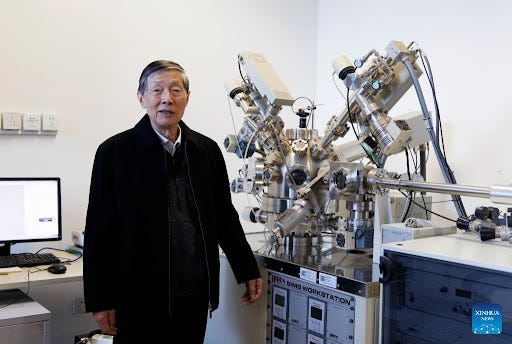
Of the 12,000 suppliers serving the rocket/satellite sector, 1200 provide laser communications.
China develops new method to mass-produce high-quality indium selenide semiconductors, a new generation of chips that outperform silicon-based technology.
Thousands of local governments overbuilt local data centers but Beijing rescued them by building a national network to sell their excess computing power.
America’s AI Action Plan will “counter Chinese influence in international governance bodies”. America then withdrew from UNESCO because “China uses it to increase its reach over educational curriculums, historical designations and even artificial intelligence”. I am not making this up, promise.
Economy & Trade
Jiangsu, Guangdong, racing for #1 provincial economy, surpass Singapore’s $1
Kenli 10-2 oilfield began production in Bohai Bay, 245 km from Tianjin. 100M+ tons proven reserves, it’s China's largest shallow-layer lithologic offshore oilfield.
BRI investments and construction contracts soared to $124 billion in H1, compared to only $122 billion in all 12 months of 2024.
Chinese tourist arrivals in the US peaked at 3 million in 2019, hit 1.1 million in 2023, A similar pattern is evident for US travel to China.
Environment & Society
"While the West argues about the cost of renewables, China is building more than the rest of the world combined, monopolising silicon and lithium, electrifying everything: cars, industry, trains. It is leading the next industrial revolution: to become the world’s first electrostate." [The Times: How China May Save Us All].
Top graduates pursuing further studies: 85% of Peking University grads do Masters degrees, with 18% going overseas. Fudan at 74% and 25%. USTC at 82% and 18%.
In 2009, manufacturing employed 200 million people. By 2015–2016, it was 150 million. Now, it’s 100 million. The 70 to 80 million who left manufacturing went into the service sector.
China’s push for automation was due to labor shortage, not the cause of it. Workers don’t want factory jobs, prefer pay and conditions at service jobs. Factories struggled to find workers. In 2014-15 many factories across China began automating. No mass layoffs: factory jobs went away through natural attrition.
Those who have a judgment against them but refuse to satisfy it despite having the ability to do so are entered into the court’s defaulter list and attract restrictions on air travel, fancy trains, private schooling, etc. With 2.5 million entries, the judgment defaulter list is a critical enforcement tool for the courts.
Geopolitics & Diplomacy
Above: Knowing Europeans’ environmental concerns, the Foreign Ministry sent an airport bus for Ursula von Der Leyen.
YouTube wipes out propaganda channels linked to China. Google removed 11,000 channels tied to state-linked propaganda campaigns from China, citing a “threat analysis”.
The U.S. military launched a clandestine program to discredit China’s Covid Sinovac inoculation targeting the Filipino public. (Reuters)
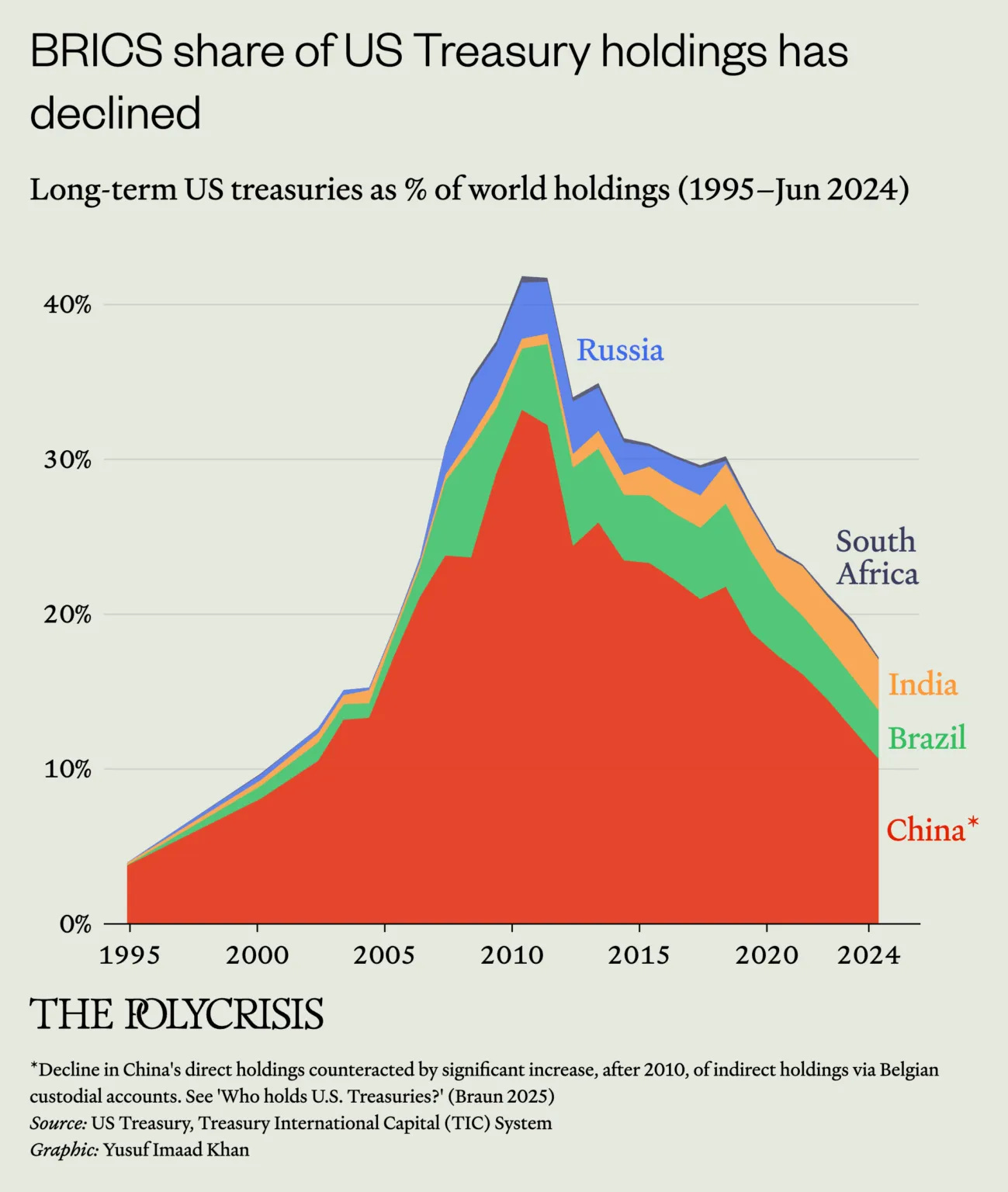
China’s holdings of US Treasuries fell below Britain’s for the first time, from a peak of $1.3tn in 2011, to $765bn.
The US Department of Agriculture fired 70 researchers, from “a country of concern,” mostly Chinese citizens with security clearances who help farmers fight pests and deal with climate change.
The Hudson Institute: China after Communism: Preparing for a Post-CCP China. “A sudden regime collapse in China is not entirely unthinkable. Policymakers need to consider what might happen and what steps they would have to take if the world’s longest-ruling Communist dictatorship and second-largest economy collapses due to its domestic and international troubles”.
Defense
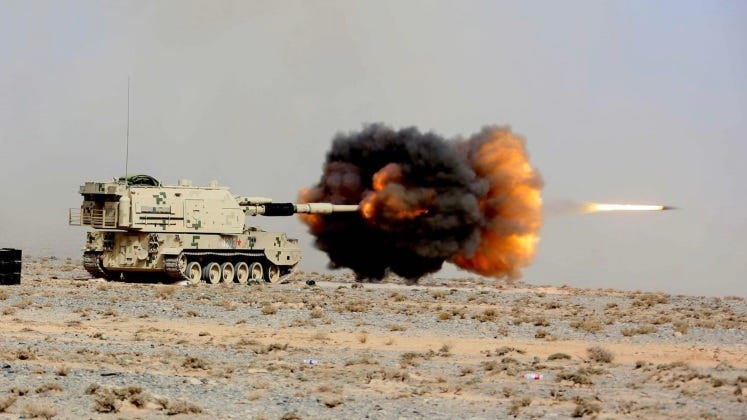
The new SH16 155mm tracked self-propelled howitzer strikes targets over 100km away. Unmanned turret has subsystems for firepower, information and control.
NORINCO’s OW5-A50 laser defence system counters drones, helicopters and mortar rounds. Mounted on an 8×8 truck chassis, with fully autonomous power generation. The Russian Armed Forces is combat testing one.
The US military is neither built nor equipped for protracted high-intensity conflict, nor can it supply a depleted proxy army with the means to prosecute a protracted high-intensity conflict. The US armaments industry is effectively a modestly scaled, high-end boutique.