The Real Divide: Renters, Capitalists and Wealth Inequality
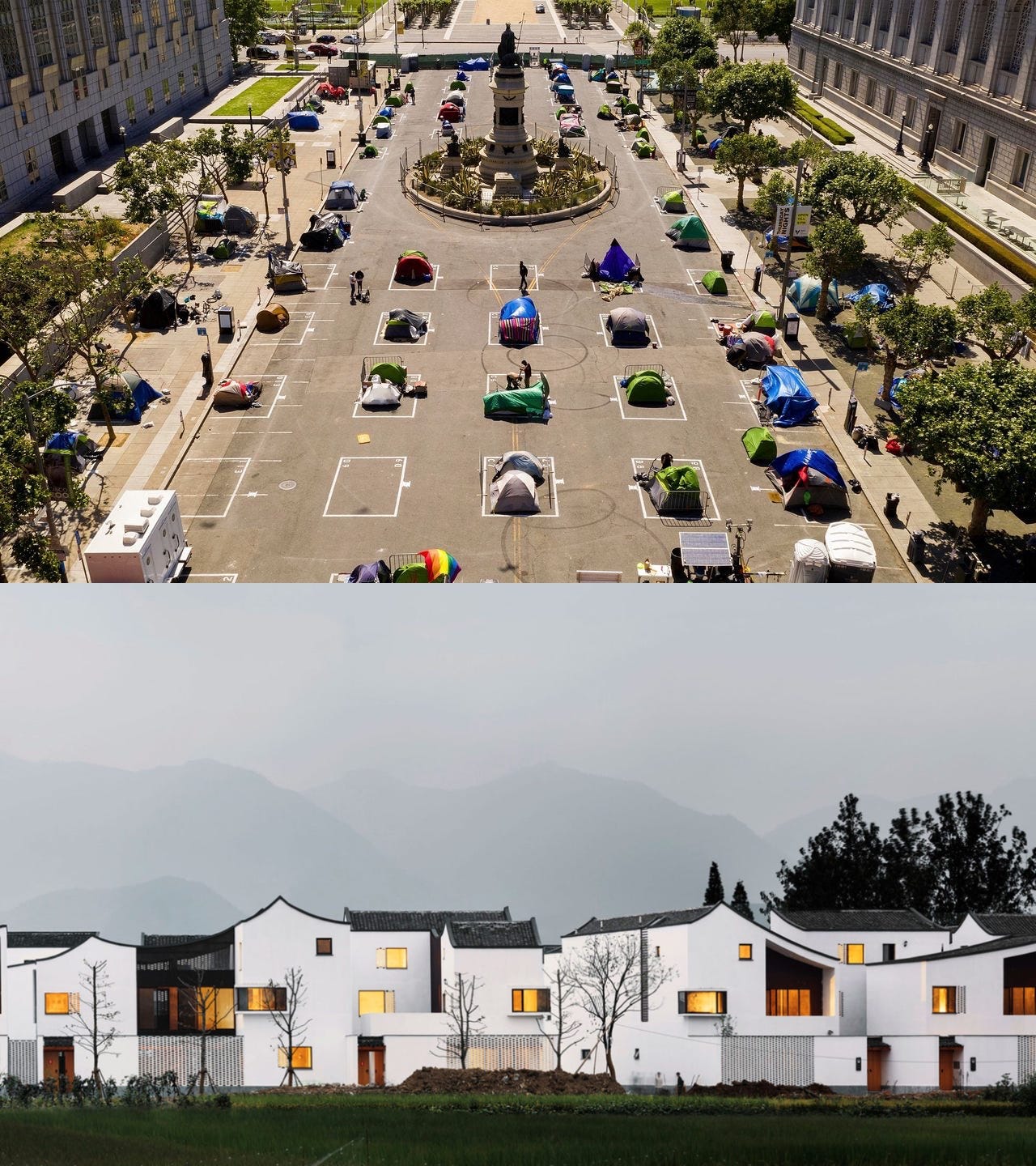
Wealth inequality in modern societies stems less from broad societal gaps and more from a fundamental split between renters and capitalists. As one analysis notes, the world of homeowners is relatively equal and clusters near overall societal means. Inequality arises primarily from differences between those who rent and those who own productive capital, a pattern that appears clearly in wealth distribution data.
China’s wealth Gini coefficient is 0.547 and falling, France’s is 0.730, and America’s is 0.801 and rising. Higher Gini values indicate greater inequality, with 0 representing perfect equality and values near 1 showing a tiny minority holding nearly all wealth while others have almost none.
Globally, the top 10% owns 71% of world wealth, yielding an estimated Gini of 0.804—higher than for income or consumption. As economist Gabriel Zucman observed, this reflects stark concentration at the top. In the United States, the top 1% of households now controls more than half of equity in public and private companies, fueled by strong stock market returns over the past decade. The richest Americans h0ld $35.4 trillion in assets, close to the $36.9 trillion held by the middle and upper-middle classes in the 50th-90th percentile. The top group’s median net worth was $17.6 million in 2019. The next 9% (rich couples) held $2.3 million and the upper-middle segment $796,000.
The bottom 80% are worth a net $67,000. Today, 68% of Americans live paycheck to paycheck amid a persistent cost-of-living crisis. Median retirement savings for working-age adults (21–64) is $955 according to 2026 U.S. Census data. That means half of them have less than $955 and many have zero.
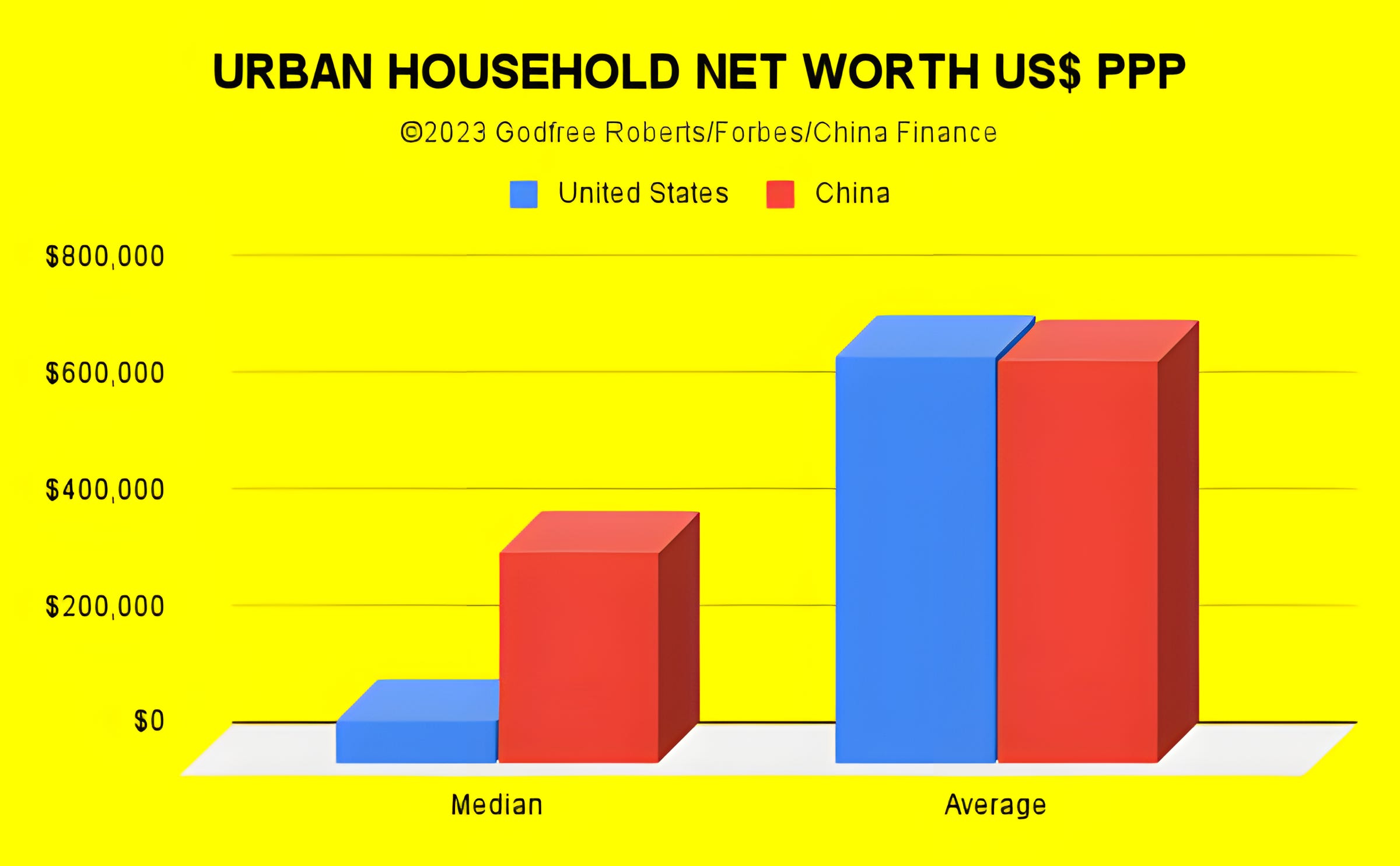
Urban China, by contrast, shows a median net worth around $200,000 (higher in top cities like Shanghai), above Chicago’s median of $93,000 (Federal Reserve) and Berlin’s roughly $49,000 (Bundesbank).
China’s lower wealth Gini reflects broader homeownership, different capital distribution patterns and much higher cash savings. Retirement realities add nuance.
China is raising retirement ages—for males born December 1970, to 61.5 years; for females, 55.25.
With life expectancy near 79 and average annual working hours 2,400, Chinese workers accumulate 4,600 hours per year of retirement. Danes, with life expectancy of 81.5, who work 1,600 hours yearly—need 6,500 hours for each year of retirement! This illustrates how ownership of assets, rather than labor income alone, drives wealth gaps. Capitalists capturing equity gains pull ahead, while renters and those with minimal savings lag.
While home ownership appears to compress inequality, the renter-capitalist divide widens it. As societies grapple with these dynamics, policies addressing capital access and retirement security may prove more decisive than traditional income redistribution alone—and closer to Chinese working people.
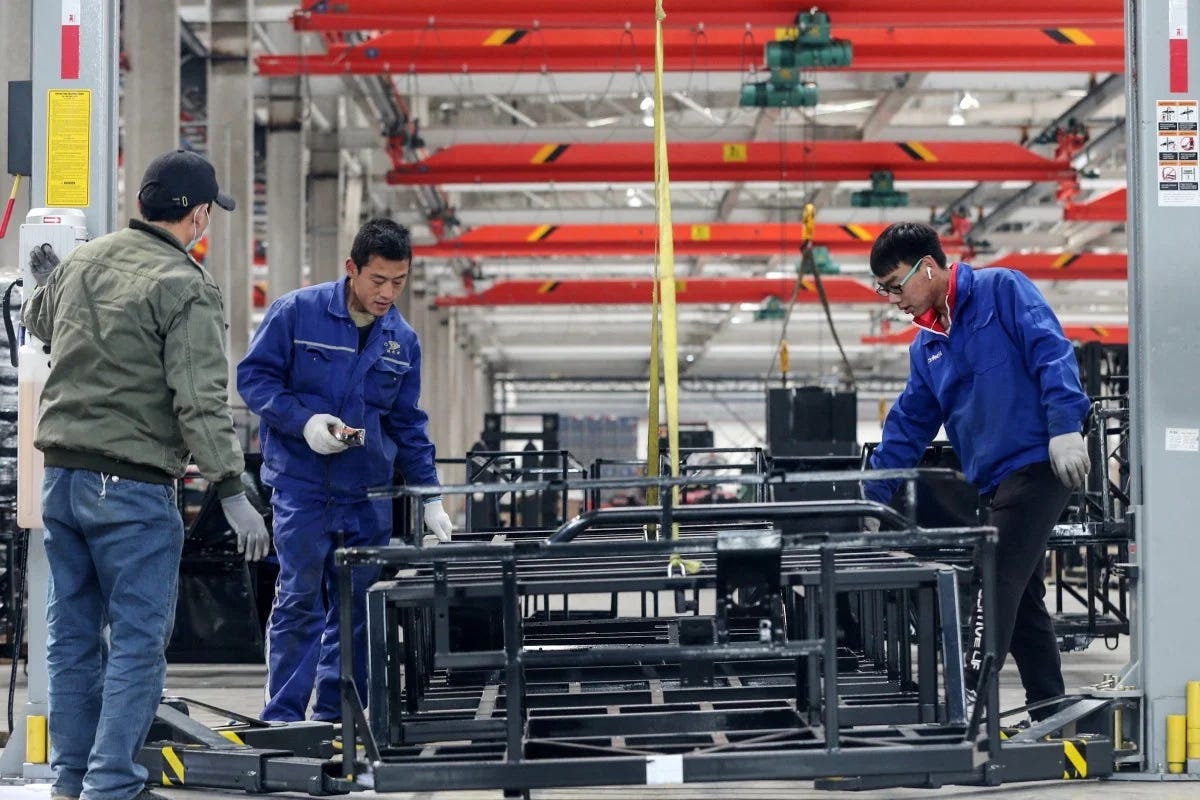
With a total workforce of 402 million, China’s labor landscape is vast, youthful (average age 38) and rapidly evolving. 84 million are in new forms of employment (platform, gig, flexible), 300 million are rural migrants, 52% still hold rural hukou and 96% of whom own homes. On average, they’ve received the equivalent of an American junior college degree (70% of truck drivers reached junior high school, 38% of ride-hailing drivers hold college degrees). 83% work in manufacturing and construction, 85% have high school education or above, and 36% hold bachelor’s degrees.
Workers and The Party
Over one-third, 36% of workers, are Party or Youth Party members — a far higher rate of political engagement than we see in Western labor forces — and are increasingly vocal about their quality of life: 70% want to spend more time with family during breaks, 30% want to care for family while still working, and 20% simply want more leisure time. Asked what they want from their union branches drew these unsurprising responses:
Increased Wages (78%)
Upskilling (70%)
Participation in management (32%)
What About American Workers?
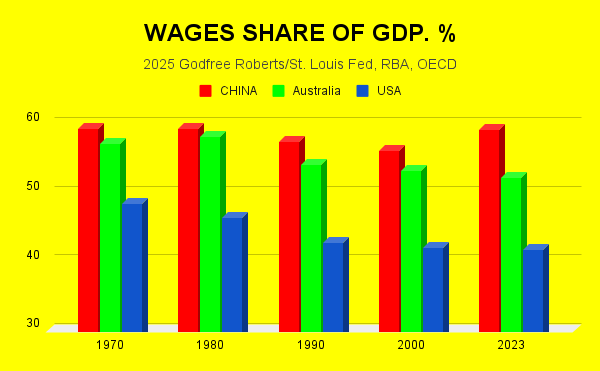
American workers’ real wages/purchasing power is little altered since 1975, when 25% of private sector workers were unionized. Today it’s 6% — giving the vast majority of them no collective bargaining power. Many rely on individual negotiation in a labor market where employers hold most of the cards. Their low levels of political engagement is the result of decades of US government policy.
The biggest difference between the two labor forces is that Chinese demands are funneled through a massive, nationwide union structure that has the ear of both companies and the government. Cai Qi, the fifth-ranking member of the CCP Politburo Standing Committee, Director of the CCP General Office and Xi Jinping’s de facto chief of staff is the union’s man. Perhaps that’s why so many are Party or Youth League members: they have a direct line to the political system that simply does not exist for non-unionized American workers, who often feel completely disconnected from both major parties.
The Bottom Line
The ACFTU survey reveals a Chinese working class that is:
Younger and better educated than many outsiders assume
Actively demanding higher wages and skills upgrading
Increasingly focused on quality of life and work-life balance
Operating within a union structure that, while different from Western models, delivers measurable pressure for improvement
By comparison, the average non-unionized American worker faces greater precarity, little institutional representation, and a labor movement in long-term decline. China’s workers are not passive. They are organized, vocal about their needs, and operating in a system that — however imperfect — treats labor as a strategic national priority rather than a cost to be minimized. The data suggests that, on several key metrics, China’s unionized workforce enjoys structural advantages that most American workers can only dream of: