

Real democracy is about creating conditions that make it possible for ordinary people to better their lives by becoming political beings and by making power responsive to their hopes and needs. Managed democracy is a political form in which governments are legitimated by elections that they have learned to control. Sheldon Wolin.
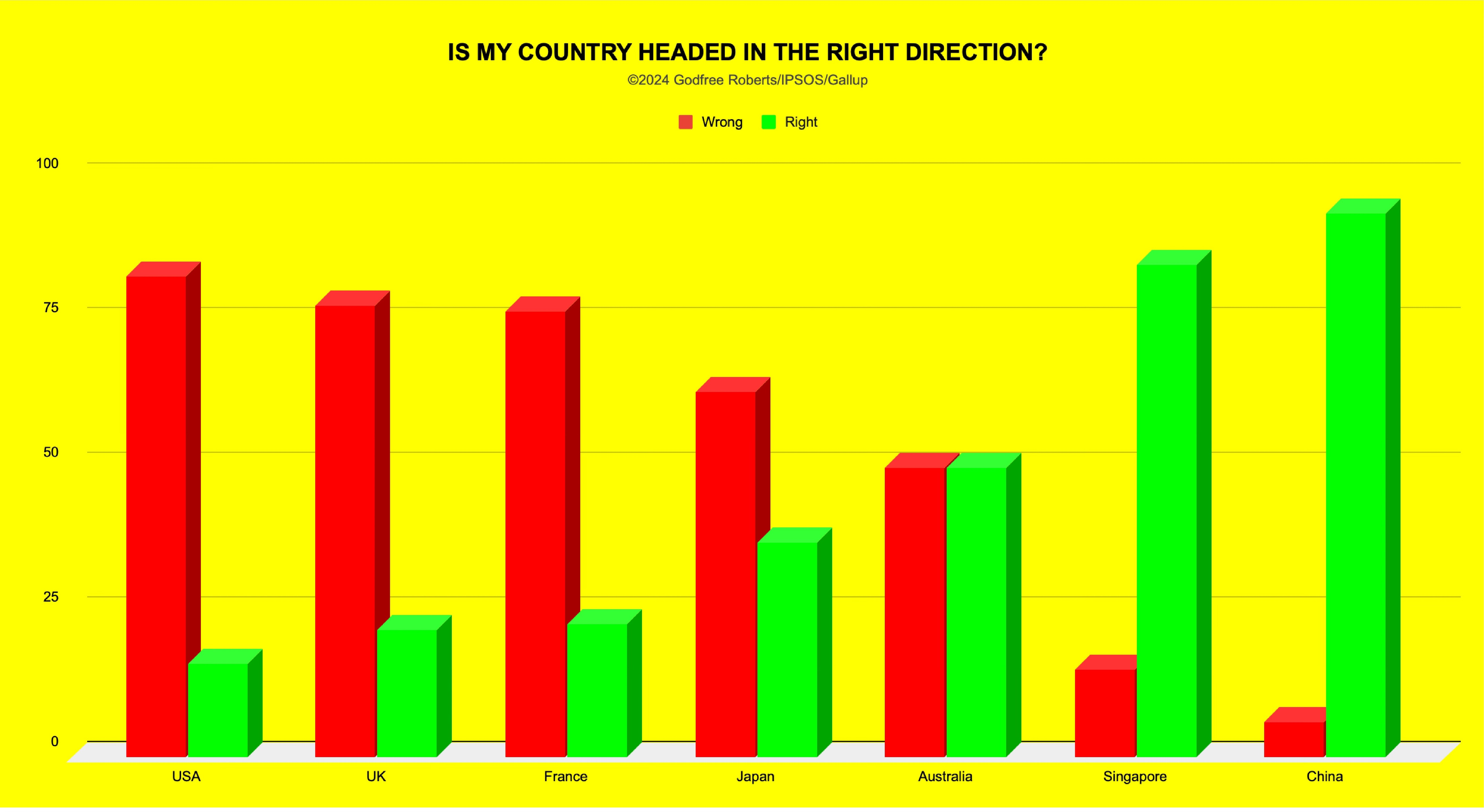
From Mao’s Mass Line to Xi’s Whole-Process People’s Democracy
China will implement Dr Sun Yat-sen’s three principles of democracy, Lincoln’s principle of ‘of the people, by the people, for the people,’ and Roosevelt’s Atlantic Charter . It will assure the independence and unity of the nation and cooperate with all democratic powers. Mao Zedong. Takeuchi Minoru, Collected Writings of Mao Zedong.
Western liberal democracy resembles internal combustion automobiles: dirty, noisy, inefficient, high maintenance, reliant on imported fossil fuels. Like an old gas-guzzling, oil burning jalopy, neoliberalism is no longer just an economic system — it is a political liability. Across the United States, Europe, and East Asia, democratic societies are experiencing an unprecedented revolt against the establishment.
China’s resembles an EV—clean, quiet, efficient, low maintenance, and powered by cheap, indigenous, renewable energy.
Like an EV, Democracy 2.0 delivers superior performance and lower maintenance costs. Higher living standards, security, pride, harmony, equity,, national resilience, strategic autonomy and global respect.
While Democracy 1.0 sputters along imported oil and endless repairs, China’s EV glides on boundless, cheap, indigenous power.
China has upgraded democracy from a ritualistic, elite-captured spectacle to a participative, responsive system that seeks everybody’s opinion on every major decision (and a multitude of smaller issues). The Chinese are the most surveyed people on earth—not for show, but because the government genuinely adjusts course to stay in sync with public sentiment.
From Mao’s mass line through Deng’s village elections to Xi’s digital round tables, policy emerges from below: petitions, hotlines, online forums, and big data analytics capture millions of voices annually: when zero-COVID fatigue peaked in 2022, protests were heard and policy pivoted within weeks. When inequality threatened “common prosperity,” tech tycoons were reined in. This is participative democracy at scale—constant, granular feedback loops that keep the state aligned with the people’s lived reality.
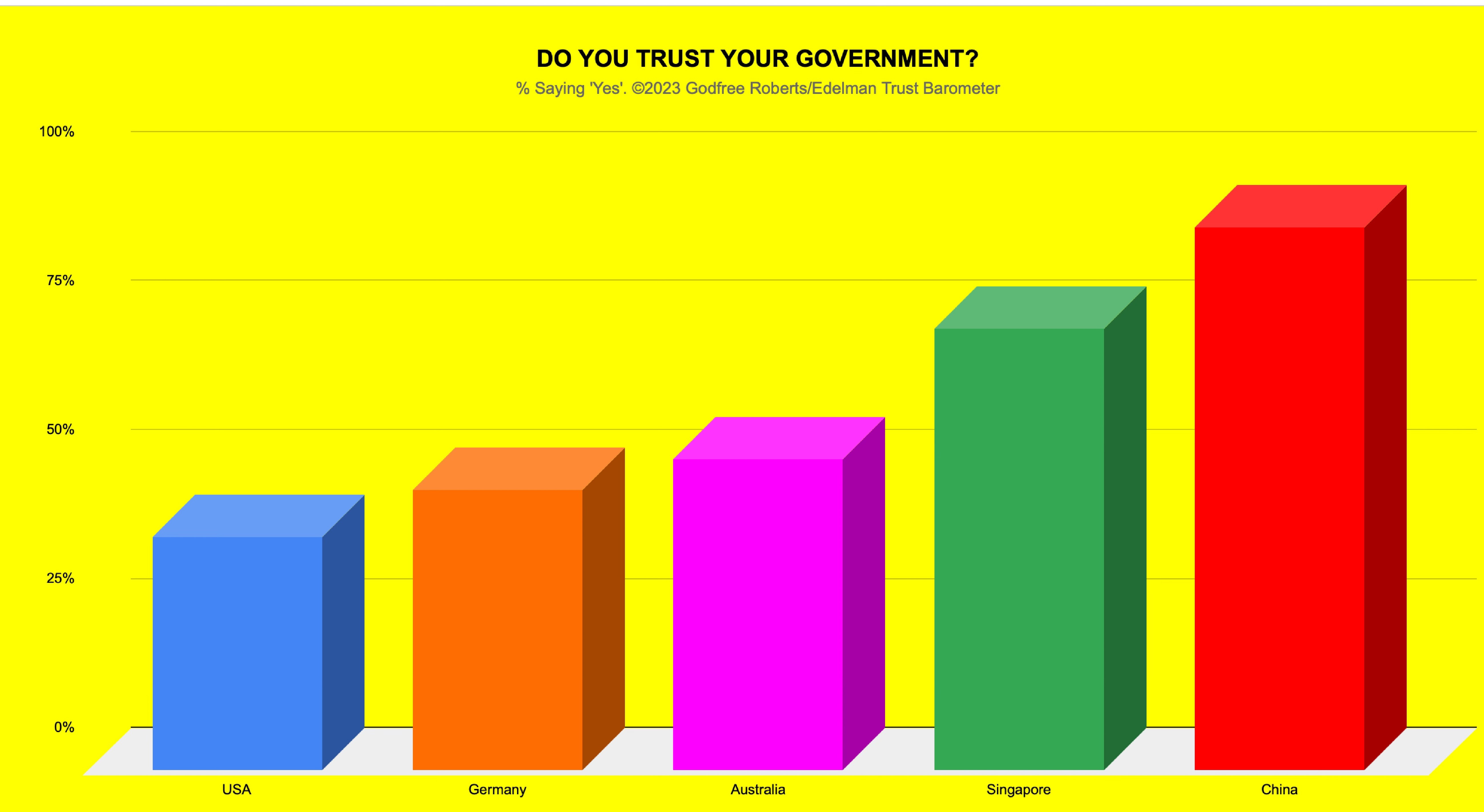
Financial democracy completes the picture.
To allow the market mechanism to be sole director of the fate of human beings and their natural environment, indeed, even of the amount and use of purchasing power, would result in the demolition of society. Karl Polanyi
Thanks to Beijing’s persistent allocation of 58% of GDP to wages, Chinese households
enjoy unprecedented economic security: 96% own their homes (the world’s highest) and average savings equivalent to 12 months’ income. No other major economy comes close. While Western workers drown in mortgage debt, medical bills, and stagnant wages, Chinese families own their homes outright and sleep with a full year’s buffer in the bank. This is not luck; it is policy. The state caps real estate speculation, subsidises housing and channels investment into wages rather than capital returns.
The result is a society where financial anxiety is rare, social mobility real, and the people feel genuine ownership of their country’s progress.Western critics fixate on the absence of multiparty elections, as if the ballot box alone defines democracy. Yet elections in the West have become auctions, bought by donors and scripted by media oligarchs. Turnout barely cracks 60% in big years; policy drifts further from public need. In China, legitimacy rests on performance and participation. Local elections are competitive, with 72% participation, and higher-level congresses are chosen through multi-tier contestation, and— crucially—the system listens and responds.
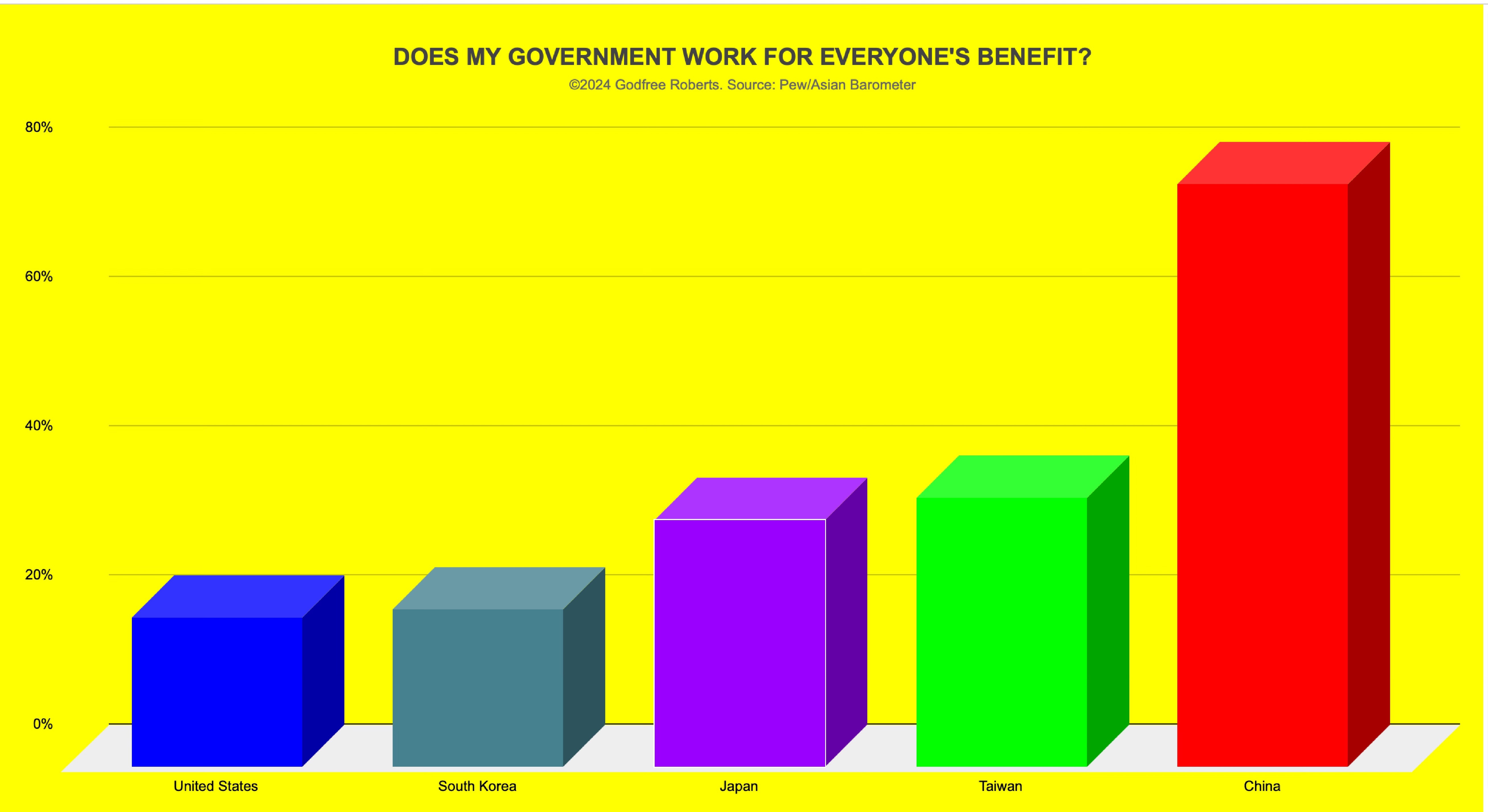
Responsiveness is key
Public anger changes policy faster than any Western petition drive. The government stays in sync because it must: its mandate is renewable daily through results.This is not a retreat from democracy; it is Democracy 2.0—participative, financially empowering, and relentlessly outcome-oriented.
This past summer, severe floods struck Hunan and Guangdong provinces, displacing thousands and causing significant damage from torrential rains. The Chinese government swiftly activated a Level-IV emergency flood response and, within hours, deployed rescue teams, restored power and roads rapidly and expanded social security measures, including direct, digital compensation for livestock losses and flood diversion impacts—demonstrating efficient crisis management and support for vulnerable populations.
Scalable democracy
Seventy-five years after Mao laid the foundations, China’s democracy is not just surviving—it is thriving, proving that the future of government by the people lies not in imitating yesterday’s West, but in building tomorrow’s responsive, equitable system today. Democracy 2.0 is participative: everybody’s opinion is sought on every major decision and a multitude of smaller issues, local and national. The Chinese are the most surveyed people on earth – and not for ritual purposes. The government mostly stays in sync with them. What a concept!