

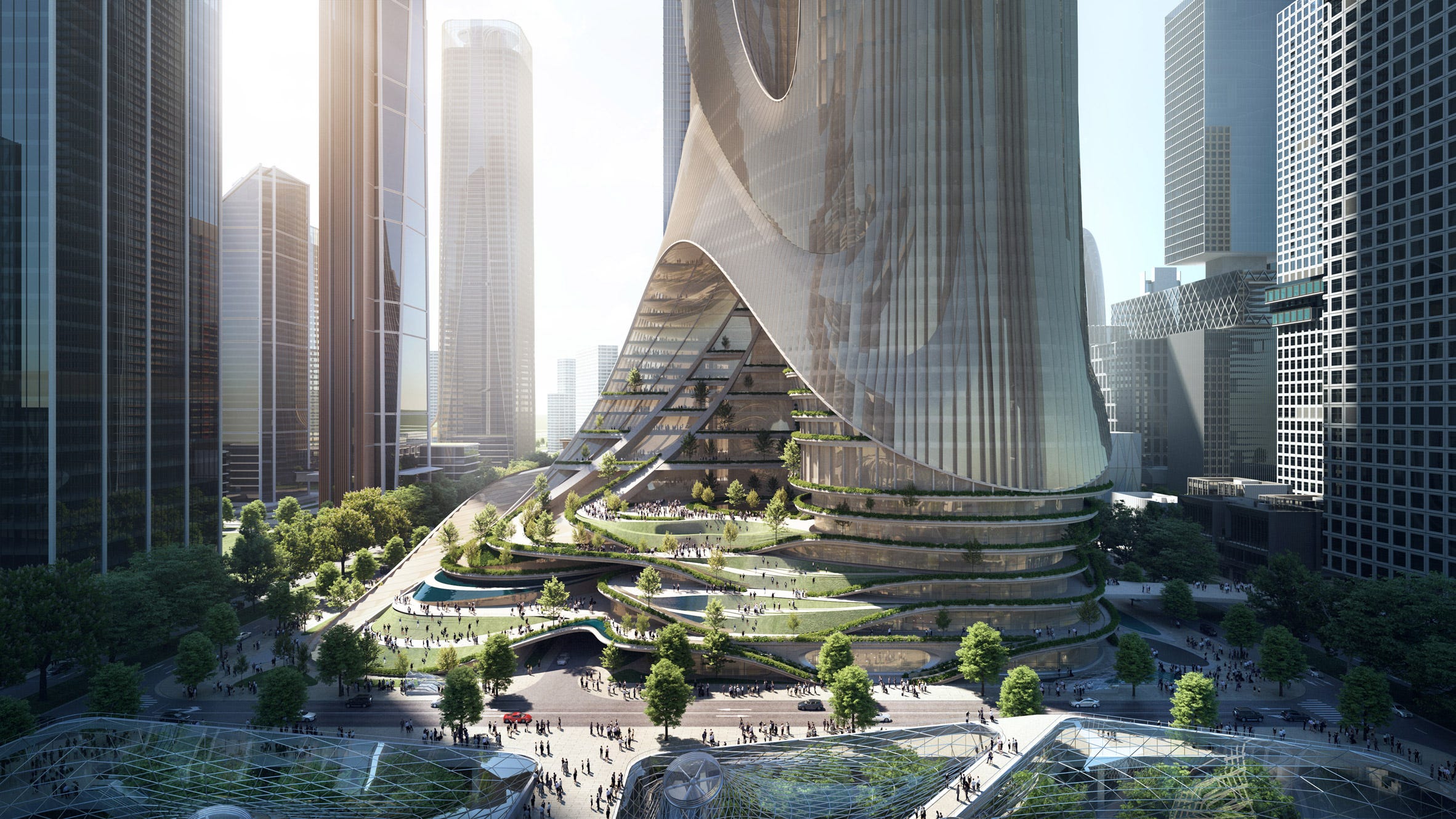
The thing about Shenzhen that changed everything for me is the access, maker-spaces everywhere open to anyone, components available in any quantity at any hour, hardware meetups and deep-tech demo nights happening every single day where founders show up with actual physical prototypes & get torn apart by engineers who’ve been shipping products for 20 years. Other things, too, like
investor sessions where VCs ask about your thermal dissipation strategy before they ask about your revenue,
the density of ambitious people building physical things in one city is something I’ve never experienced anywhere else on earth
the education pipeline feeding all of this is staggering, chinese kids start building robots & programming microcontrollers in middle school as part of the national curriculum by high school they’re doing projects in machine vision& embedded systems
Tsinghua, USTC & Zhejiang universities produce researchers who go from publishing a paper to founding a startup with govt-backed seed-funding in a matter of months…
the pipeline from fundamental research to applied engineering to company creation is seamless here in a way that would make any european researcher cry
what we in the west completely miss is the role of the tech giants as ecosystem builders, Juawei Alibaba, Tencent & Baidu are operating as deeptech accelerators at a scale that has no equivalent in the west.
Huawei alone runs the ascend AI ecosystem where they give hardware startups access to their custom AI chips their toolchains& their cloud infrastructure for free or near free so founders can build on top of chinese silicon instead of depending on NVIDIA
Alibaba’s academy funds and incubates in quantum computing chip design and autonomous driving then plugs them directly into alibaba cloud’s customer base & tencent invests in robotics companies and connects them to its manufacturing partners. These aren’t passive financial investors writing checks from SF, they’re active ecosystem architects who provide silicon compute distribution channels & manufacturing access in a single integrated package
The 4 AI chip startups, « four dragons» Moore Threads, MetaX, Biren and Enflame all going public simultaneously valued at billions:
Huawei rolling out a 3y roadmap to overtake NVIDIA & the deeptech VCs here write checks with a technical depth I’ve rarely seen anywhere: people who read your papers who understand your architecture at the gate level who challenge your engineering choices on EMI coupling & power stage layout before they even look at your market
I genuinely think think the sanctions have been the greatest unintentional R&D program in history, they forced China to build in 5y what would have taken 20 without them, and now the country is sitting on a self sufficient semiconductor ecosystem, a dominant position in clean energy tech, a manufacturing base that operates like a collective intelligence network and an education system that produces millions of engineers who see building physical things as the highest form of ambition
Meanwhile the west is spending trillions on a war in the middle east and debating whether AI needs another ethics committee.
I know where I want to be and it’s here.
Of course, I do not fully agree with Godfree’s line that “sanctions have been the greatest unintentional R&D program in history.” There is some truth in that claim, but it needs to be handled with much more precision. Sanctions do not automatically generate innovation. In many countries, external containment and technological blockade would just as easily produce stagnation, fragmentation, or outright decline.
What really matters is that China already possessed a substantial industrial base, a sufficiently large domestic market, a complete manufacturing network, and strong organizational capacity. What sanctions did was not to create these capabilities from scratch, but to suddenly accelerate processes that could otherwise have unfolded much more slowly: domestic substitution, technological coordination, and the concentration of capital around strategic sectors.
Put differently, sanctions did not create China’s capabilities. They forced China to mobilize, integrate, and reorganize capabilities that had already been accumulated to a meaningful degree — only at a much faster pace.
Excellent post. I’ve lived in Shenzhen for 20 years and have witnessed the incredible rise of growth and innovation produced in this truly amazing city.